.svg)
Agent Assist 2.0.3
-
Improvement: Send Direction on all call_info events generated for RingCentral (previously we sent only for the “ACTIVE” status)
-
Bugfix: post call events, (summarization, sentiment) could be triggered when there were no audio streams on the call. Now they are triggered only when the call ends (SESSION_ENDED event received in the gRPC channel) and the dialog_info and summary_info events are sent also on a true call end.
AGI-Connector 4.24.0
New Features
-
Call State Transfer via SIP User-to-User Header - Applications can now carry selected data fields across call transfers using the standard SIP User-to-User header (RFC 7433). When a call is transferred between OCP instances through a carrier, application-defined fields marked in the Transfer Block are preserved and available when the call arrives at its new destination. This enables seamless context continuity for transfer scenarios without requiring external lookup or session stores, so your application doesn't need callers to repeat details or re-identify themselves.
Fixes
-
Improved Reliability During Live Conversations - An intermittent authentication timing issue that occasionally interrupted conversation turns is now resolved, so conversations proceed smoothly without unexpected interruptions.
Operations
-
Fewer False Alerts When Callers Hang Up - A caller ending the call while a prompt is still playing is an expected event and is no longer recorded as an error, reducing false-positive alerts in monitoring systems.
-
Clearer Warning for Inactive Routing Overrides - When a configured routing override cannot take effect, a warning is now recorded at startup instead of the setting being silently ignored, making misconfigurations easier to spot before they affect live calls.
AudioHub 7.4.0
-
Expanded language and locale coverage for Omilia Lyra voices
-
Introduced support for the new TTS model layer, in line with introduction of new TTS voice tiers. The Omilia Lexis voice family comes as the Default tier in its supported locales, as an OCP included feature.
-
QoS: Introduced additional service outage contingencies, to protect from caller experience disruptions.
Batch Transcription Service 1.3.1
Fixes
-
Accurate Number Transcription in Batch Transcription - Batch Transcription now renders two-digit numbers as digits instead of spelling them out as words, improving transcript accuracy and readability.
-
Memory leak and RSS growth fixes
-
Extended error types - Batch Transcription now separates outage errors from incorrect input.
Chat-Connector 8.19.1
Improvements
-
Chat sessions now report an accurate end-of-chat status when an agent transfer request times out, instead of an ambiguous or incorrect status.
-
Chat sessions connected to a Salesforce integration now automatically close and notify the customer when Salesforce signals an inactivity timeout.
Security
-
This release includes security updates.
Copilot 1.16.0
-
The floating Copilot widget is hidden while you are in Onboarding, so it no longer sits on top of that flow.
-
Uploading a file that is too large now shows a clear size-limit message instead of failing silently.
-
A search bar on the chat applications dropdown.
-
File uploads are malware-scanned before they are processed.
Copilot 1.17.0
-
Long replies stay where you are reading instead of jumping you to the bottom of the message.
-
Tables in chat render as real tables instead of a wall of text.
-
On Onboarding, the phone number you attach is marked as selected so you can see it took.
-
You can finish an in-flow Concierge in Copilot (welcome greeting, routes, and dialog behaviour) without opening Orchestrator to fill those fields.
-
An agent created in Copilot is wired onto the canvas by its id, so a guessed name can no longer point at an agent that does not exist.
Deployment Service 1.7.0
-
This release focuses on internal platform and reliability work behind the scenes. There are no customer-visible changes included in this release.
DiaManT 10.47.0
New Features
-
Silent Caller Detection: DiaManT now automatically detects callers who never provide any input during a call (a built-in "SilentUser" indicator) so applications can route them directly to a transfer or hangup instead of cycling through repeated no-input prompts.
-
Scheduled Application Variables: Application Variables can now be configured to activate only within a specific date/time window (e.g. a holiday notice that turns itself on and off), with no application redeploy required.
-
Per-Task Agent Retry Limits: Individual agent tasks (e.g. a "Anything else?" re-ask prompt) can now override the default maximum human-agent-request and no-input-retry counts just for that interaction, allowing faster escalation when a caller explicitly asks for a human.
Improvements
-
Expanded Performance Monitoring: New latency metrics covering Redis, S3, KMS, Kafka, NLU, SubDialogs, and OmAccounts calls, with breakdowns by timeout and error type, give operations teams much clearer visibility into where call time is spent.
-
Clearer Diagnostic Logs: Numerous error and warning log messages across dialog processing were made more specific and consistent, speeding up production issue triage.
Environments Manager 1.28.1
Security
-
This release includes security updates.
Insights UI 1.27.9
New Features
-
Sentiment and Call Experience Insights for Agent Assist - OCP Conversational Insights® now includes a dedicated sentiment review for Agent Assist reporting, so supervisors can see call-experience trends at a glance. Caller and agent sentiment are shown as trends over time, alongside breakdowns of overall caller sentiment and agent responsiveness, filtered by the same date range and groups you already use. This gives supervisors a fast way to spot shifts in call quality without reviewing individual calls.
-
Schema Version Selection for Data Export Subscriptions - When creating or updating a subscription in OCP Secure dataFeed®, you can now choose a schema version to control the shape of the data you receive, keeping downstream integrations consistent as your data formats evolve. Export Service User Guide | Create an Export Subscription
Improvements
-
Faster, Lighter Dialog Audio Playback in Monitor - Audio for voice dialogs in Monitor now loads only when you choose to play it, reducing unnecessary page load time and ensuring you're only billed for recordings you actually listen to.
-
Group Selection Now Persists on Page Reload - Organization administrators no longer need to reselect their saved group after reloading the Monitor page - your last selection is remembered automatically.
Fixes
-
Reliable Audio Playback When Revisiting Dialogs - Replaying a step's audio after switching between dialogs in Monitor now always fetches the correct recording, instead of occasionally replaying audio left over from a previously viewed dialog.
-
Improved Reliability of Alerting Screens - Alert History now loads without error, and updates to alert filtering criteria display correctly right away, so what you see on screen always matches what was saved.
-
Clearer Tab Labels in Reporting - Tab labels across Reporting pages, including Real-time report and Agent Performance, now display cleanly at all screen widths, without overlapping the underline indicator or nearby filters.
-
Accurate Time Range When Jumping to Monitor from Real-time Report - Selecting "Show Actual Dialogs" from the Real-time report now carries over the correct time window to Monitor, so matching dialogs appear instead of a false "no dialogs found" result.
-
Correct Date Selection for Exports in Forward-Shifted Time Zones - When your time zone shifts the local date forward, the export date picker now correctly allows you to select that day, instead of disabling it as if it were in the future.
Insights 1.27.10
Fixes
-
Fixed a Timezone mismatch when redirecting from Reporting to Monitor tab.
Integration Configurations 1.14.0
New Features
-
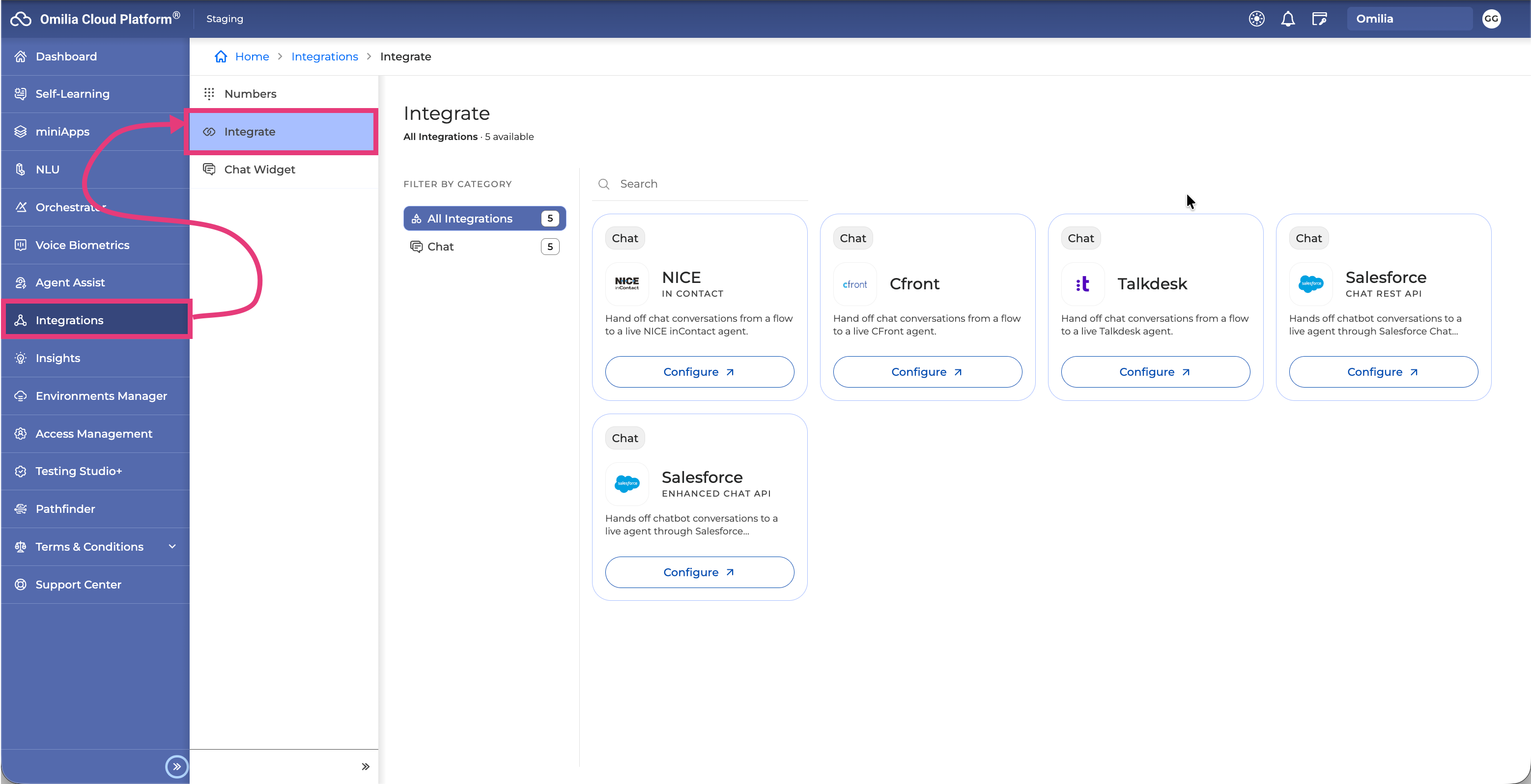
Simplified Transfer Provider Setup in the Integrate Tab - Transfer settings for NICE inContact, CFront, Talkdesk, and Salesforce can now be configured directly from the Integrate tab, each provider with its own dedicated card, so you no longer need to switch to OCP miniApps® to manage them. Existing configurations continue working with no re-setup required, unifying integration management in one streamlined location.
Improvements
-
Faster Editing for Transfer Configurations - Transfer configuration rows in the Integrate tab are now clickable, taking you straight into edit mode instead of requiring a menu click, reducing accidental clicks on the wrong action.
Fixes
-
This release includes security updates.
Liveness Detection 7.0.0
RA Detection model - v4.0.2
-
Incorporated W2V-BERT 2.0 architecture into training scripts
-
Implemented training data augmentation into the liveness detection training pipeline
-
Added ArcticEcho data to the training corpus for liveness detection
-
Additional TTS data for liveness detection training
-
Implemented multi-head attentive statistics pooling for liveness detection models
Liveness Detection
-
The first 3 sec chunk without duplication
Fixes
-
Fixed zero-downtime feature
-
Changed normalization
Liveness Detection 7.1.0
RA Detection model - v4.0.3
-
Replayed genuine data labeled as spoofed removed from training
LLM Service 1.4.4
Fixes
-
Various Internal Service and Security Improvements
Metrics API 3.5.0
New Features
-
Admin-Level Access Controls for Groups and Aggregations Data - Administrators can now retrieve group and aggregation data under admin-level permissions, keeping sensitive metrics access properly separated from standard user access while returning the same familiar data you already rely on.
miniApps 2.44.0
New Features
-
Prebuilt Integrations for WebService OCP miniApps® - WebService OCP miniApps® now include a Prebuilt Integrations tab, letting you configure a supported provider integration (read or write operation, target object, and fields) directly in the miniApp editor. This removes the need to build and maintain custom outbound calls for supported providers, reducing setup effort and configuration errors. Provider credentials are handled securely behind the scenes, you configure the integration once and it's ready to use in your conversation flow.
Please note that this feature may not be available for all OCP environments. Availability can vary depending on the specific environment configuration and deployment setup.
-
Configurable Volume for Google Chirp Voices - Text-to-speech volume settings now include the correct decibel range (-96 to +16 dB) when using Google's Chirp voices, replacing the previous generic control that didn't match how these voices measure volume. This gives you finer control over playback loudness for Chirp-based voice configurations.
-
Mock Response Engine for WebService Testing - You can now simulate external service responses when building and testing WebService miniApps, instead of depending on live third-party endpoints. Define matching rules by method, URL, headers, or body, and return a controlled status code, body, and delay, including error and edge-case scenarios, all without touching production integrations. This makes it easier to validate your conversation flows before going live, and existing live-request behavior is unaffected when mocking is turned off. Mocking Responses in miniApps
-
French (Belgium) Locale Support - MiniApps now supports the French (Belgium) locale, extending language coverage for customers serving French-speaking users in Belgium.
-
Danish Locale Support - MiniApps now supports the Danish (da-DK) locale, extending language coverage for customers serving Danish-speaking users.
Improvements
-
Simplified Chat Tab - The miniApp Chat tab is being simplified as Chat Widget configuration moves to a dedicated Chat Widget tab in Integrations. Where enabled, the Chat tab now shows only key generation, transfer configuration, and a Try WebChat button, with the API key masked by default. Chat Tab Chat Widget Configurator User Guide
-
More Consistent No-Match Handling for Mixed Speech and DTMF Input - When a caller mixes speech and touch-tone input in the same interaction, key presses that don't match any configured option now register as a standard no-match, so error counting and escalation behave consistently across input types.DTMF Tab | [inlineExtension]DTMF Response configuration (Intent miniApp)
-
More Reliable Locale Activation and Deactivation - Activating or deactivating a language on the Manage Languages tab is now more reliable: unsaved edits made elsewhere in the miniApp are preserved, defaults are applied consistently for new languages, and exporting a miniApp always reflects the latest saved state.
-
Configurable Greeting Threshold - The maximum number of greeting reactions allowed per session is no longer fixed at five. You can now set your own threshold in the Greeting Reaction settings, tailoring how many times a greeting is triggered before it stops.
-
Faster Response Times for Cached WebService Requests - WebService miniApps with a large number of cached responses now count cached items more efficiently, reducing the runtime delay callers could previously experience during interactions that rely heavily on cached data.
-
More Complete Chat Configuration Audit Trail - Audit logs for chat configuration requests, create, update, and delete, now include the affected miniApp, giving administrators clearer traceability of which asset each change applied to.
-
Accurate Intent Export for Custom NLU Apps - Exporting sample utterances to TSV from Manage Intents now downloads only the intents actually configured for your miniApp and locale, instead of the full built-in intent list. Custom intents without predefined examples show the same guidance as the interface, so exports always match what you see on screen.
-
Accurate Reporting for Interaction Outcomes - Reporting on why an interaction ended is now more accurate. Once a specific cause has been recorded, generic system errors no longer overwrite it, giving you a clearer picture of interaction outcomes in your reporting and analytics.
Fixes
-
Reliable DTMF Escape Toggle - Turning off DTMF Escape now fully disables the feature. Previously, disabling the toggle only suppressed the voice announcement, and pressing the configured key still triggered an exit or transfer. Key presses are now treated as normal input once the feature is switched off.
-
Greeting Reaction Now Triggers in Date Range Prompts - Greeting reactions now correctly trigger in the Date Range miniApp. Previously, callers who greeted the system during a date-range request didn't receive the expected greeting response.
-
Function Renames Now Reflected in Outputs - Renaming a user function in the User Function tab now automatically updates any output field that referenced it, so the Outputs tab no longer shows an empty value after a rename.
-
Correct Localization for Sample Utterances - Sample utterances in Manage Intents now display in the language you're viewing, instead of always showing English text when browsing intents in other locales.
miniApps 2.44.1
Fixes
-
This release contains no customer-facing changes. All work in this release was internal infrastructure maintenance.
mrcpTTS 1.2.2
Improved reliability of spoken prompts on longer calls.
-
Previously, on a longer call a prompt could stop part-way through and the caller would hear silence for the rest of the call. Prompts now play reliably regardless of how long the call lasts.
OCP NLU 1.17.1
Fixes
Autocorrect Engine Security Update - This release includes a security update to the Autocorrect engine, addressing previously reported vulnerabilities with no impact on existing functionality.
OCP NLU 1.17.2
NLU Engine Security Update - This release includes a security update to the NLU Engine, addressing previously reported vulnerabilities with no impact on existing functionality.
Orchestrator 1.36.4
New Features
-
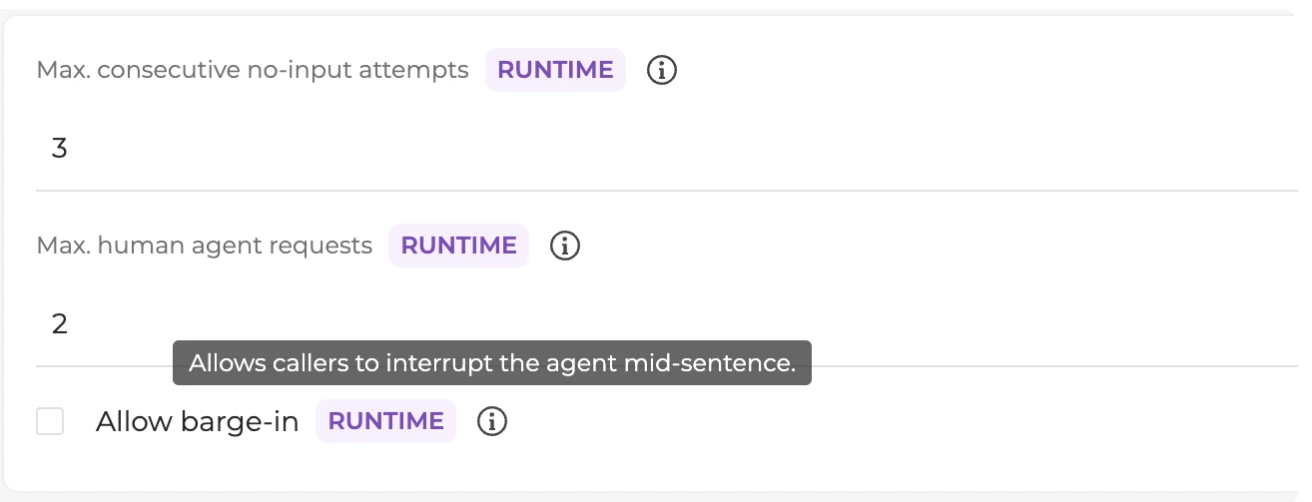
Configurable Barge-In for Agent Prompts - Agent cards now include an "Allow barge-in" toggle, letting callers interrupt the agent's prompt playback and start speaking right away instead of waiting for the message to finish. Turn it on for agents where faster, more natural interactions matter; it stays off by default to preserve existing behavior.
Orchestrator 1.37.0
New Features
-
Fine-Tuned Speech Recognition by Agent and Language - You can now configure speech recognition behavior for each virtual agent and language individually, choosing a recognition grammar, tuning recognition parameters, and boosting important words or phrases so they're recognized more reliably. An app-wide default can also be set so every agent benefits without repeating the same configuration. This gives you finer control over recognition accuracy for specialized vocabulary, reducing misrecognition on terms that matter most to your callers.
Improvements
-
Descriptions for Escalation Queue Guardrail Inputs - When you set a guardrail flow for an escalation queue, its input fields now appear with editable descriptions, making clear what each field expects. This makes escalation queue setup easier to understand and maintain, especially when guardrail flows are reused later.
-
Reliable Condition Settings in the Flow Builder - Editing a condition block with multiple "not equal" comparisons no longer flips all fields to "equal" when you change one field selection. Condition settings now stay exactly as configured, and overlapping dropdown options in the condition editor are also fixed for clearer visibility.
-
Clearer Deployment Errors for Empty Flows - When a deployment fails because a flow has no blocks, the error message now names the specific flow that needs attention, so you can find and fix the issue immediately instead of searching through every flow in the app.
-
Uninterrupted Chat During Theme Switching - Switching the interface theme while a chat window is open no longer closes the chat, so you can change your display preferences without losing your conversation.
Fixes
-
Complete Set of Call Failure Reasons for Error Handling - Three call failure reasons, covering maximum disconfirmation attempts and data model errors or timeouts, were missing from the failure-reason options used to build error handling logic. All valid failure reasons are now available, so you can build complete and accurate error-handling paths for every call outcome.
-
Reliable Rate and Volume Controls for All Text-to-Speech Providers - Rate and volume controls in the text-to-speech configuration screen now display correctly for every voice provider, even when provider details are temporarily unavailable. Amazon voices show the appropriate preset options, and all other providers show adjustable numeric controls, so voice configuration is never left incomplete.
-
Fixed Label Selection When Creating a New App - The app creation window no longer breaks when you select a label while creating a new app.
-
Readable Locale Names in Configuration Dropdowns - Locale selectors across text-to-speech, natural language, and audio configuration screens now show proper, human-readable language names instead of internal codes, with a graceful fallback to the locale code for any language not yet named.
-
Up-to-Date Agent Configuration After Deployment - Deploying an agentic app after updating its instructions or escalation queue now always deploys the latest saved version. Previously, a deployment could reflect the configuration from one save earlier, so recent changes were not immediately live.
-
Consistent Navigation After Deleting an App - Deleting an app while viewing its canvas now redirects you to the applications list, matching the behavior already available elsewhere, instead of showing a "not found" page.
-
Fixed Legacy App Audio Uploads - Uploading audio files for legacy applications no longer fails with a permissions error, so legacy app deployments complete successfully.
-
Reliable Call Exit Handling on Reused Prompts - When a re-ask prompt is reused across multiple conversation branches and a caller declines to continue, the call now correctly routes to the configured exit experience instead of ending unexpectedly. This ensures callers who ask to exit are handled consistently no matter which path led them there.
-
This release includes security updates.
Orchestrator 1.37.1
New Features
-
Automatic Routing for Silent Callers — Applications can now recognize callers who never provide any input during a call and automatically route them to a transfer or exit action, reducing dead-air interactions and giving non-responsive callers a clear next step instead of stalling in the dialog.
-
Model-Aware Text-to-Speech Voice Selection — Voice selection now factors in each voice's underlying speech model and quality tier, giving a clearer view of available text-to-speech options when configuring an application. Selecting a premium or exclusive voice prompts acceptance of the applicable terms before it can be used. Voice behavior stays consistent even as detection of streaming-capable voices continues to improve behind the scenes.
Fixes
-
Reliable Tool Deployment for Agents — Tools attached to an agent now deploy with their full configuration intact. Previously, some tools could lose key identifying information during deployment, so they no longer worked as expected. Configured tools now function correctly right after deployment.
-
Reliable Application Import — Fixed an issue where importing an application that includes a global Natural Language Understanding override on an OCP miniApps® component could fail with an error. These applications now import successfully every time.
Pathfinder 1.9.5
New Features
-
Smarter Knowledge Base Search for Follow-Up Questions – When your virtual agent asks a clarifying question and the caller replies briefly (e.g. "yes"), the knowledge base now understands the original question behind that reply and searches for it. This improves answer accuracy across multi-turn conversations, with no change to single-question searches.
Improvements
-
Clearer Resource Ingestion Failure Reasons – When a document, URL, or file fails to be added to your knowledge base, you now see a more specific reason for the failure instead of a generic message, making it easier to identify and resolve the issue.
Pathfinder 1.9.6
Fixes
-
Improved Reliability During Peak Call Volume - Under heavy call volume, a background knowledge-base maintenance task sometimes slowed shared platform resources, causing intermittent call connection delays. This maintenance now runs safely, so call handling stays reliable even during busy periods.
Self Learning Agents 1.16.0
-
When connecting with Ccaas, operators can pick a Test, Evaluation, or Production ingestion profile (Production is the default).
-
The connect queue list shows only active inbound voice queues, so outbound dialer skills no longer clutter the monitor list.
-
First-ingestion progress now reaches 100% when some contacts were skipped (no recording) or failed, instead of looking stuck.
-
Very short answered-and-dropped contacts are skipped before download, so they do not waste quota or break batch transcription.
-
Amazon Transcribe as the speech-to-text provider for audio ingest
-
RingCX connect no longer stalls on the credentials step when the browser reports the OAuth popup as closed.
Self Learning Agents 1.17.0
-
Testing – Every Self-Learning tenant now has a Testing tab. It tracks pass rate over time, shows how much of the playbook the tests actually exercise, and ranks the cases that fail most often. Each failure opens the conversation behind it in Insights Monitor.
-
Quality Management – Every Self-Learning tenant now has a Quality Management tab. It grades real conversations against the playbook, one question per behaviour, so a score names the behaviour that was missed, and it drafts a coaching note for the agent concerned. The AI grader can be calibrated against a human-scored sample, with agreement reported rule by rule.
-
Knowledge Review – Where agents gave customers different answers to the same question, a review queue now puts the disputes, the conditional answers and the liability-sensitive ones in front of a person first. What they sign becomes the tenant's knowledge, and a price quoted wrongly once goes on a watch list rather than being lost in the average.
-
Connecting a Contact Centre – Connecting a contact centre now studies a sample of past calls immediately and then keeps sampling live ones, so the first use cases appear within seconds. Progress counts what was actually sampled and assessed rather than every call in the tenant, and a backfill with nothing left to fetch ends instead of running forever.
Self Learning Agents 1.18.0
-
Playbook rules are cards you can edit, so authored checks can be changed in place.
-
Quality Management lets you drill into each question and script, with a two-hour grid so you can see coverage across the day.
-
A project built from documents opens on the Mission Control board instead of the empty connect pitch.
-
A missing agent name on one transcribed call no longer drops the rest of that file.
STT 8.10.0
Improvements
-
Improved Recognition Accuracy During Brief Pauses - deepASR® recognition results now capture only the audio spoken before a short pause, so words spoken right after a pause no longer get attributed to the wrong part of the conversation. This delivers more consistent, accurate results in conversations with natural short pauses.
STT 8.10.1 Hotfix
Fixes
-
This release includes security updates.
Testing Studio 1.23.0
New Features
-
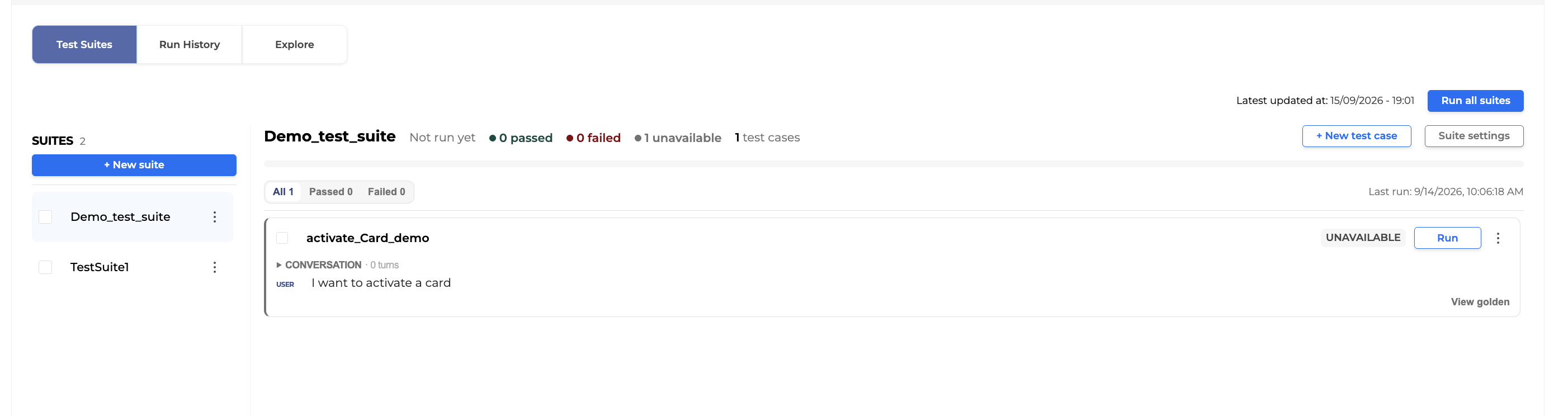
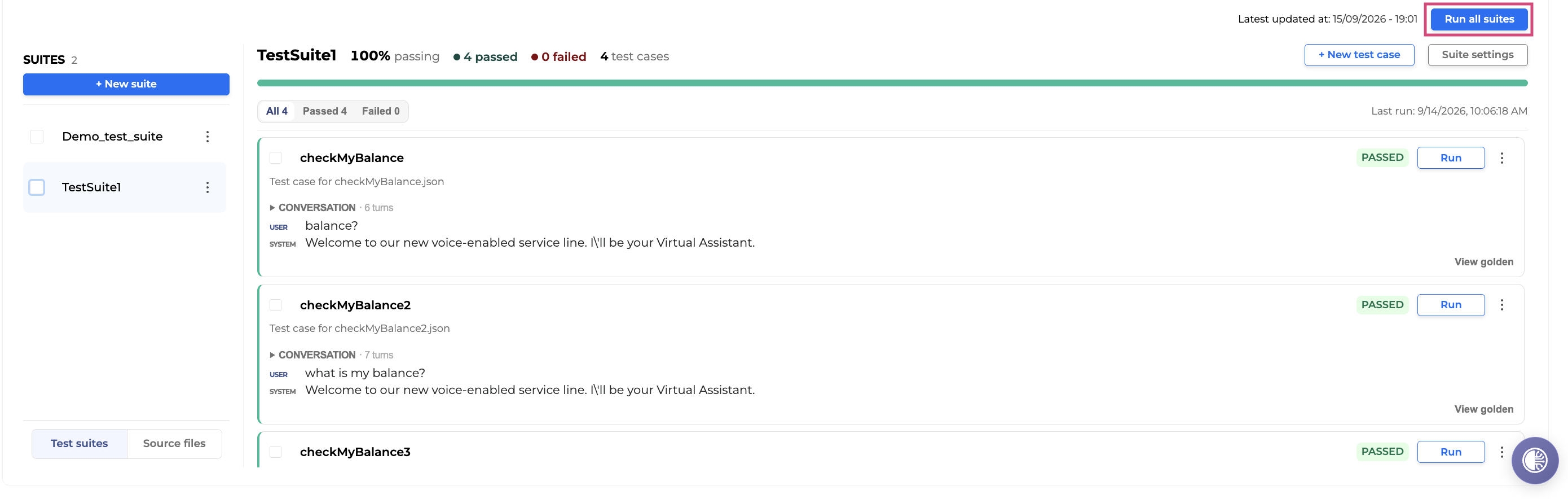
Redesigned OCP Testing Studio® Test Suites Workspace - The Test Suites workspace has been rebuilt to make everyday test management faster and clearer.
-
Test cases display as status cards (passed, failed, not run, or unavailable) that you can filter, view in detail, author, edit, and goldenize or delete without leaving the suite view.
-
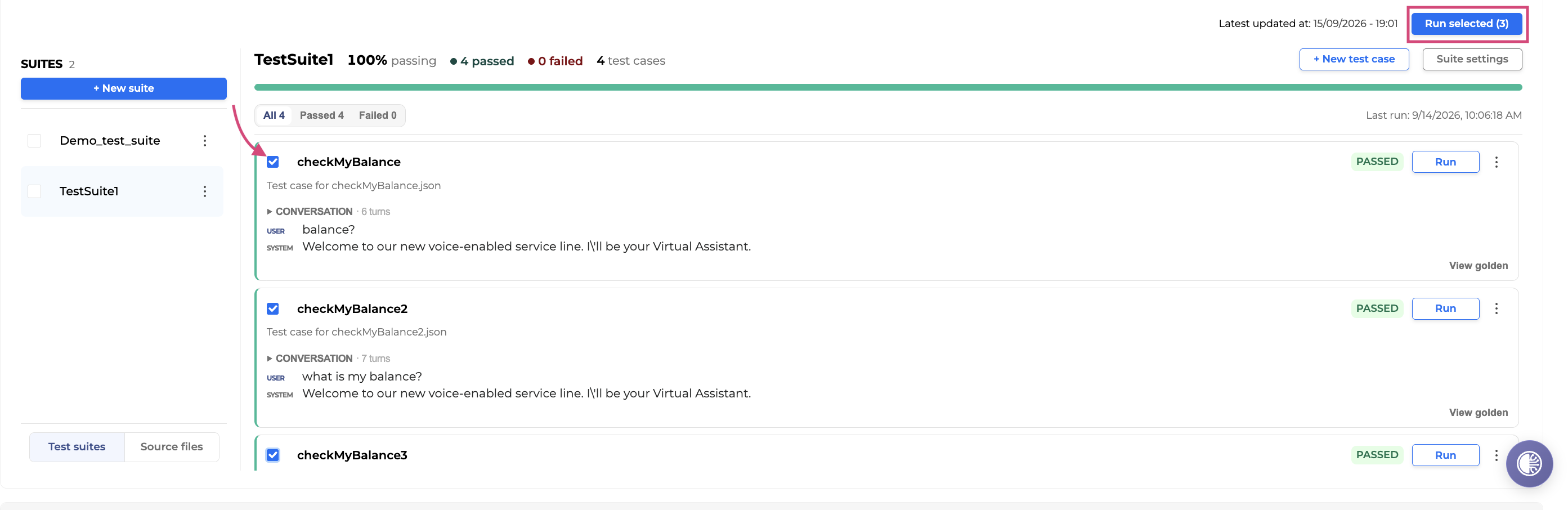
Run an entire project, selected suites, or specific test cases, with a review step before the run starts.
-
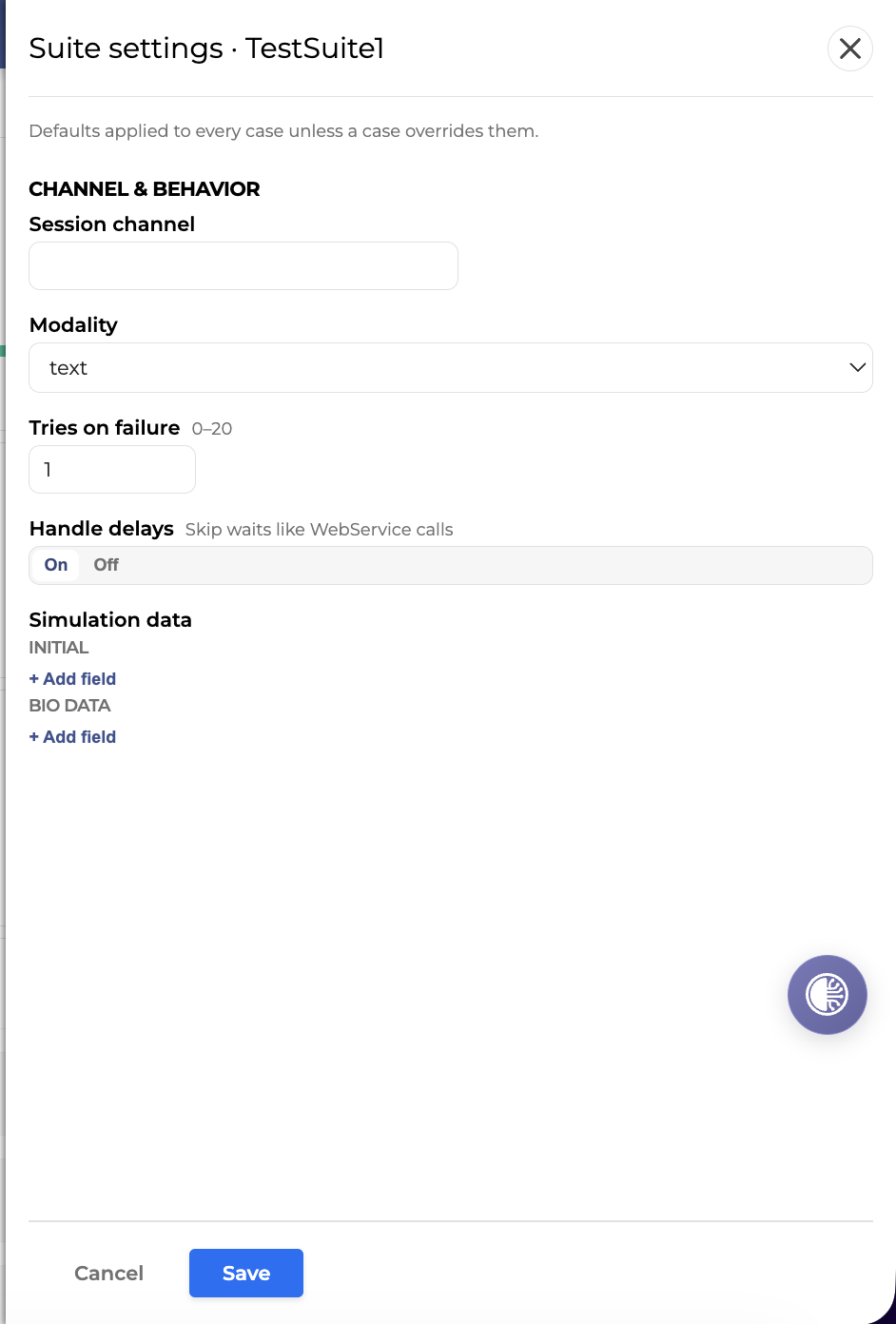
Configure suite-level settings - channel, modality, retries, and simulation data, from a dedicated settings panel.
Fixes
-
Accurate Run Progress Reporting - In-progress test run percentages now display correctly and never exceed 100%, so the Run History progress bar always reflects real, valid progress for chat and voice runs alike.
-
Reliable Delete Confirmation for Test Cases - Deleting the last remaining test case in a suite now shows the same success confirmation as any other deletion.
-
More Accurate Routing Tag Checks - Test runs using the routing tag assertion no longer fail incorrectly for agents without a routing tag, so results reflect genuine mismatches only.
-
This release includes security updates.
Testing Studio 1.23.1
-
This release focuses on backend reliability and stability work. There are no customer-facing changes in this release.
TTS 3.2.3
Highlights & Improvements
-
Improved Fraction and Measurement Pronunciation: Fractions written as
x/yare now read as fractions instead of calendar dates, without requiring SSML markup.1/2 kgreads as “one half kilogram” and13/16 }}as “thirteen sixteenths”, with correct singular/plural units ({{5/2 hours→ “five halves hours”) and compound units (3/4 km/h→ “three fourths kilometer per hour”). Date-shaped values with no following unit (e.g.1/2) continue to be read as dates. Use the spelled-out unit (3/16 inches) where a fraction is intended. -
Smoother Spelled-Out Text & Alphanumeric Sequences: Enhanced speech synthesis stability and confidence for spelled-out text (e.g., spelled names, email addresses, license plates) and alphanumeric/SKU codes (e.g.,
VS504). -
Accurate Decimal Normalization: Added support for decimal numbers written without a leading zero (e.g.,
.95 lis properly normalized and read as "zero point nine five liters")..
TTS 3.3.0
Highlights & Improvements
-
New Peninsular Spanish (es-ES), Mexican Spanish (es-MX) and Brazilian Portuguese (pt-BR) verbalization support, alongside new Lexis voices in respective locales.
-
US telephone numbers read correctly. Numbers written without a leading
1-are now recognized instead of being mis-grouped with the dash read aloud; a country code in parentheses or with a+no longer leaks a literal bracket, plus sign or a stray "dash"; and a short pause now separates the number groups instead of running them together. -
Closing brackets are no longer dropped from input. Every closing round, square and curly bracket was being silently removed from incoming text before synthesis.
Voice Biometrics 1.17.5 (Hotfix)
This is a targeted hotfix for BioStore, addressing a database schema configuration issue and a startup issue affecting certain environments.
Voice Biometrics 1.17.6 (Hotfix)
This is a targeted hotfix release for BioStore & BioService. It addresses a high CPU usage affecting the Frankfurt environment.
Voice Biometrics 1.18.0
This release focuses on multi-region deployments. Voice Biometrics now reads from a local regional database replica instead of routing every query back to the primary region, which removes the latency and timeouts previously seen on Console and API requests in secondary regions. It also introduces optional plain user ID export for analytics, IAM authentication for Kafka, and a set of API and reliability fixes.
New Features
Regional Database Reads - Voice Biometrics now directs write operations to the primary database and read operations to a replica in the local region, substantially reducing response times and removing timeouts previously affecting Console pages and profile, session, verification, blocklist, and fraudster API calls.
Optional Plain User ID in Analytics Events - events sent to the analytics stack carry a hashed user ID by default. This release adds a per-group option (disabled by default, requires a support request and written authorisation) to send the plain identifier instead, in the existing user_id field.
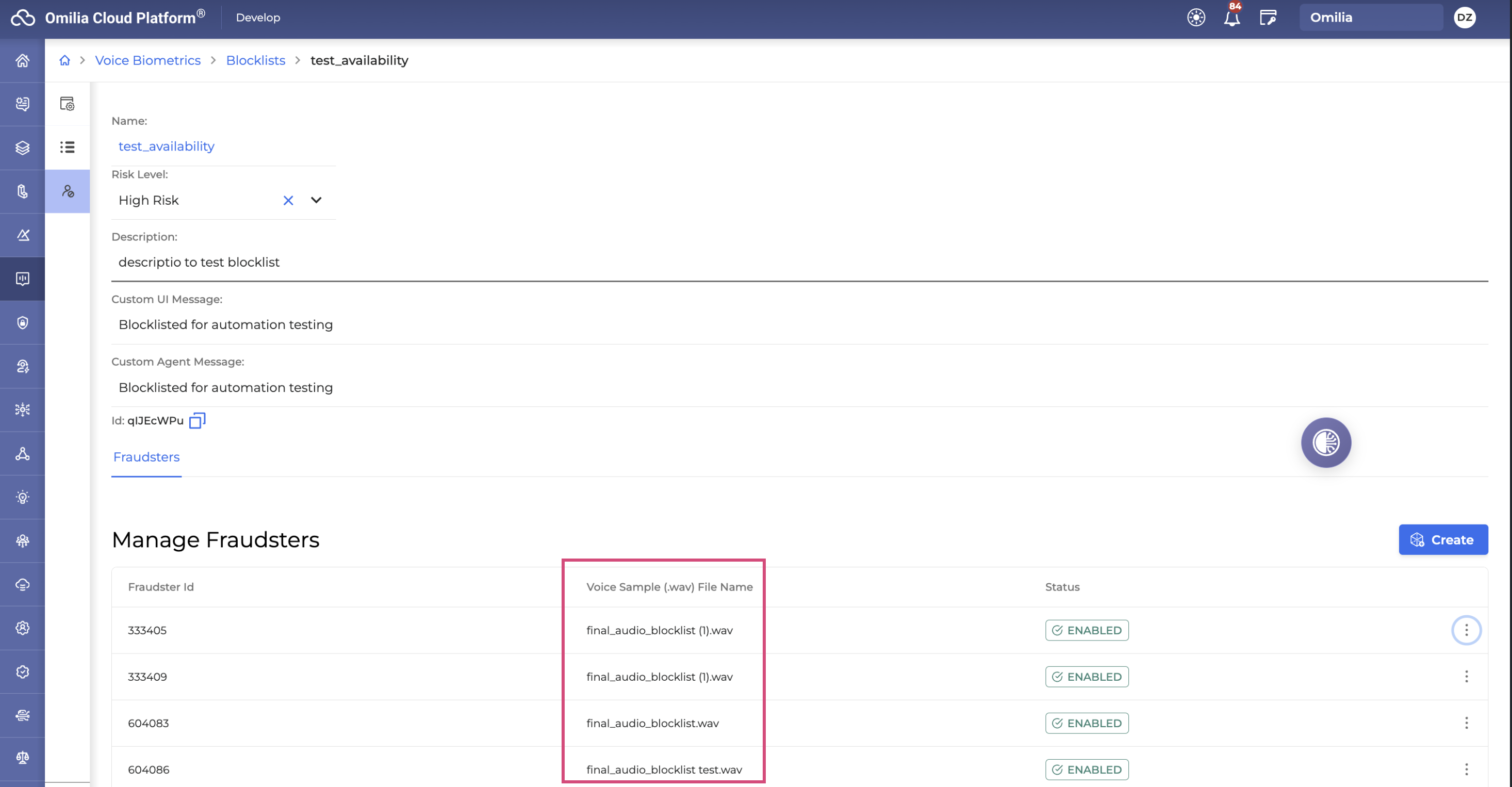
Blocklist File ID - the Blocklisting page now shows the ID of the uploaded audio file for each entry.
Improvements
-
Kafka authentication: Kafka connections now support AWS IAM authentication as an alternative to unauthenticated access (existing unauthenticated connections are unaffected unless the new configuration is supplied).
-
API protection:
batch_sizeon the V2 sessions and fraudster voiceprint queue endpoints is now validated against both a lower and an upper bound. See Upgrade Notes. -
Error handling: Storage service failures with no error payload are now reported as a controlled upstream error instead of a generic 500.
-
Documentation: the published API spec, endpoint collections, and reference pages have been regenerated.
Webchat 2.37.1
Fixes
-
Accurate Agent Connection Status After Chat Ends - Fixed an issue where the chat window kept showing a message about connecting to an agent even after the conversation had ended, timed out, or the agent went offline. Customers no longer see this outdated status once a session closes.
OXP 1.21.0
New OCP xPacks
-
nl-NL Universal deepNLU® xPack v3.1.0-Addresses-
The nl-NL Universal xPack has been enhanced with address recognition, delivered as a separate nl-NL Universal+ xPack.
-
Fixed OCP xPacks
-
fr-BE Universal deepNLU® xPack v3.1.0-
Tuning for the recognition of the following entities: Alphanumeric, CONVENTIONAL, DIALOGACT, InfoRequest, MetaAction, MonetaryAmount, MonetaryCurrency, Numeric, and ProperTimeInstant.
-
Increased accepted Numeric entity length to 21 digits.
-
Increased accepted Alphanumeric entity length to 27 characters.
-
Restricted DIALOGACT=HOLD to miniApps that genuinely support hold.
-
Fixed Alphanumeric splitting on a typed hyphen, returning two values instead of one.
-
Fixed Alphanumeric dropping a capitalized prefix in mixed alpha + numeric input.
-
-
fr-FR Universal deepNLU® xPack v3.3.0-
New public entities: BECity, BEPostCode, BEProvince, BERegion, BuildingPart, FRArea, FRDistrict, FRPointOfInterest, FRVillage, and POIRelation.
-
Tuning for the recognition of the following entities: Alpha, Alphanumeric, Amount, AmountType, AmountUnit, ComChannel, CONVENTIONAL, Country, DayOfMonth, DayPeriod, DIALOGACT, EndDate, Hour, InfoRequest, LocationIndicator, MetaAction, MonetaryAmount, MonetaryCurrency, Month, Numeric, ProperTimeInstant, StartDate, StreetType, TimeRelativeToNow, Year, and YesNo.
-
Increased accepted Numeric entity length to 21 digits.
-
Increased accepted Alphanumeric entity length to 27 characters.
-
Restricted DIALOGACT=HOLD to miniApps that genuinely support hold.
-
Fixed Alphanumeric splitting on a typed hyphen, returning two values instead of one.
-
Fixed Alphanumeric dropping a capitalized prefix in mixed alpha + numeric input.
-
-
fr-FR Universal deepNLU® xPack v3.3.0-Addresses-
Tuning for the recognition of the following entities: Alpha, Alphanumeric, Amount, AmountType, AmountUnit, ComChannel, CONVENTIONAL, Country, DayOfMonth, DayPeriod, DIALOGACT, EndDate, FRArea, FRPointOfInterest, FRStreet, Hour, InfoRequest, LocationIndicator, MetaAction, MonetaryAmount, MonetaryCurrency, Month, Numeric, ProperTimeInstant, StartDate, StreetName, StreetType, TimeRelativeToNow, Year, and YesNo.
-
Increased accepted Numeric entity length to 21 digits.
-
Increased accepted Alphanumeric entity length to 27 characters.
-
Restricted DIALOGACT=HOLD to miniApps that genuinely support hold.
-
Fixed Alphanumeric splitting on a typed hyphen, returning two values instead of one.
-
Fixed Alphanumeric dropping a capitalized prefix in mixed alpha + numeric input.
-
-
fr-CA Universal deepNLU® xPack v3.11.0-
New public entities: BECity, BEPostCode, BEProvince, BERegion, BuildingPart, FRArea, FRDistrict, FRPointOfInterest, FRVillage, and POIRelation.
-
Tuning for the recognition of the following entities: Alpha, Alphanumeric, Amount, AmountType, AmountUnit, CACity, ComChannel, CONVENTIONAL, Country, DayOfMonth, DayPeriod, DIALOGACT, EndDate, Hour, InfoRequest, LocationIndicator, MetaAction, MonetaryAmount, MonetaryCurrency, Month, Numeric, ProperTimeInstant, StartDate, StreetType, TimeRelativeToNow, USCity, USStreet, Year, and YesNo.
-
Increased accepted Numeric entity length to 21 digits.
-
Increased accepted Alphanumeric entity length to 27 characters.
-
Restricted DIALOGACT=HOLD to miniApps that genuinely support hold.
-
Fixed Alphanumeric splitting on a typed hyphen, returning two values instead of one.
-
Fixed Alphanumeric dropping a capitalized prefix in mixed alpha + numeric input.
-
-
nl-NL Universal deepNLU® xPack v3.1.0-
New public entities: NLArea, NLPointOfInterest, POIRelation, NLPostCodePrefix, and NLPostCodeSuffix.
-
Tuning for the recognition of the following entities: Alphanumeric, CONVENTIONAL, Numeric, and Text.
-
Added support for the SentimentDescriptor entity.
-
Increased accepted Numeric entity length to 21 digits.
-
Increased accepted Alphanumeric entity length to 27 characters.
-
-
nl-BE Universal deepNLU® xPack v3.1.0-
New public entities: NLArea, NLPointOfInterest, POIRelation, NLPostCodePrefix, and NLPostCodeSuffix.
-
Tuning for the recognition of the following entities: Alphanumeric, CONVENTIONAL, Numeric, and Text.
-
Added support for the SentimentDescriptor entity.
-
Increased accepted Numeric entity length to 21 digits.
-
Increased accepted Alphanumeric entity length to 27 characters.
-
OXP 1.21.1
New OCP xPacks
-
sv-SE Universal deepNLU® xPack v3.0.0 -
en-US Redaction deepNLU® xPack v1.1.0
Fixed OCP xPacks
-
en-AU Universal deepNLU® xPack v3.8.0-
Tuning for the recognition of the following entities: Alpha, Alphanumeric, CONVENTIONAL, DayOfMonth, DayPeriod, DIALOGACT, Month, SentimentDescriptor, Year, and YesNo.
-
-
en-GB Universal deepNLU® xPack v3.17.0/en-GB Universal+ deepNLU® xPack v3.17.0-Addresses-
Tuning for the recognition of the following entities: Alpha, Alphanumeric, CONVENTIONAL, DayOfMonth, DayPeriod, DIALOGACT, Month, SentimentDescriptor, and Year.
-
Date miniApp: a bare Cardinal/Ordinal number with an optional preposition (e.g. "on the 5th") is now correctly recognized as DayOfMonth when nothing else is present.
-
-
en-US Universal deepNLU® xPack v3.19.0/en-US Universal+ deepNLU® xPack v3.19.0-Addresses-
Tuning for the recognition of the following entities: Alphanumeric, DayOfMonth, Month, USCity, and Year.
-
Fixed inconsistent dialog behavior when both NotAvailable and Hold values were present.
-
Fixed a typed hyphen in Alphanumeric values (e.g. "abcd-1234") being split into two separate values instead of one.
-
Fixed Alphanumeric dropping a capitalized prefix in mixed alpha+numeric input (e.g. "Aug282026" was read as "282026").
-
Fixed a compound month (e.g. "10/11") followed by a day starting with "oh" or "zero" not being recognized in date context.
-
Address recognition: tuning for the recognition of StreetNumber and USStreet entities.
-
-
en-US Universal 2.0 deepNLU® xPack v2.7.0/en-US Universal 2.0+ deepNLU® xPack v2.7.0-Addresses-
Updated to the latest en-US Universal dependencies.
-
-
es-ES Universal deepNLU® xPack v3.3.0-
Tuning for the recognition of the following entities: Alpha, Alphanumeric, Building, CONVENTIONAL, Country, DayOfMonth, DIALOGACT, EndDate, Month, MonetaryCurrency, StartDate, Text, Year, and YesNo.
-
Added support for the SentimentDescriptor entity. Words and phrases expressing a positive or negative attitude are now recognized, and the detected polarity is returned as the value of the entity.
-
NLU support for date range recognition. Utterances that state a period, for example "desde el primero de enero hasta el dos de marzo", now return the StartDate and EndDate entities (under the
dateRange_miniAppNLU tag). -
Multi-word phonetic letter references are now recognized generically, without requiring a dictionary entry for each phrase. Existing dictionary-based references continue to work.
-
Bare spelling-alphabet (NATO) letters (e.g. "alfa," "bravo") are now recognized on their own, without requiring surrounding context.
-
Fixes to spelled letter and digit sequences: spoken separators (guion, guion bajo, barra, punto), the filler words letra, cifra and número, and the conjunction "y" no longer truncate the value or leak into it; doble and triple now repeat the following character correctly; and a single spoken number on its own is returned as an Alphanumeric entity.
-
Date fixes: spoken dates no longer lose DayOfMonth or return the wrong Year outside date contexts, and an ordinal day followed by a month and number no longer returns a second DayOfMonth.
-
Wider coverage for DIALOGACT=RESTART, including the "reiniciar" verb family and imperative forms such as regresa al principio and comience de nuevo.
-
Dialog and courtesy fixes: the affirmative "dije" family is now recognized on a confirmation turn and its negative counterpart is no longer returned twice; pan-Hispanic courtesy forms mil gracias, buen día, chau, chao added; and multiword Compliments now return COMPLIMENT instead of general sentiment.
-
Context fixes: at a suggestion step in a Text miniApp, an answer containing a modal verb or a month is no longer misread as a yes or no reply, and in the yes or no re-ask context "no creo" no longer returns DIALOGACT=CLOSING.
-
-
es-US Universal deepNLU® xPack v3.12.0/es-US Universal+ deepNLU® xPack v3.12.0-Addresses-
Tuning for the recognition of the following entities: Alpha, Alphanumeric, Building, CACity, CARegion, CONVENTIONAL, DayOfMonth, DIALOGACT, EndDate, Month, SentimentDescriptor, StartDate, USCity, USCounty, USState, USVillage, Year, and YesNo.
-
Bare spelling-alphabet (NATO) letters (e.g. "alpha," "bravo") are now recognized on their own, without requiring surrounding context.
-
Fixes to spelled letter and digit sequences: spoken separators (guion, guion bajo, barra, punto), the filler words letra, cifra and número, and the conjunction "y" no longer truncate the value or leak into it; doble and triple now repeat the following character correctly; and a single spoken number on its own is returned as an Alphanumeric entity.
-
Date ranges stated with explicit start and end wording now return StartDate and EndDate reliably, including verbal anchors and del ... al ... forms that mix cardinal and ordinal day readings.
-
Date fixes: spoken dates no longer lose DayOfMonth or return the wrong Year outside date contexts, and an ordinal day followed by a month and number no longer returns a second DayOfMonth.
-
Added the "reiniciar" verb family to the Restarts dictionary for DIALOGACT=RESTART.
-
Dialog and courtesy fixes: the affirmative "dije" family is now recognized on a confirmation turn and its negative counterpart is no longer returned twice; pan-Hispanic courtesy forms mil gracias, buen día, chau, chao added; and multiword Compliments now return COMPLIMENT instead of general sentiment.
-
Address recognition: added support for hyphenated spoken street numbers (e.g. "ciento sesenta-y-dos").
-
Address recognition: fixed ordinal street names (e.g. "5th Street") not being recognized due to a conflict with cardinal-number processing.
-
-
pl-PL Universal deepNLU® xPack v3.1.0-
Resolved a conflict between AGENT_REQUEST and CLOSING/NEW_TASK entities.
-
Increased accepted Numeric entity length to 21 digits.
-
Increased accepted Alphanumeric entity length to 27 characters.
-
Fixed Year recognition problems in
pl-PLdates. -
Added support for the SentimentDescriptor entity. Words and phrases expressing a positive or negative attitude are now recognized, and the detected polarity is returned as the value of the entity.
-
Webchat 2.38.0
Improvements
-
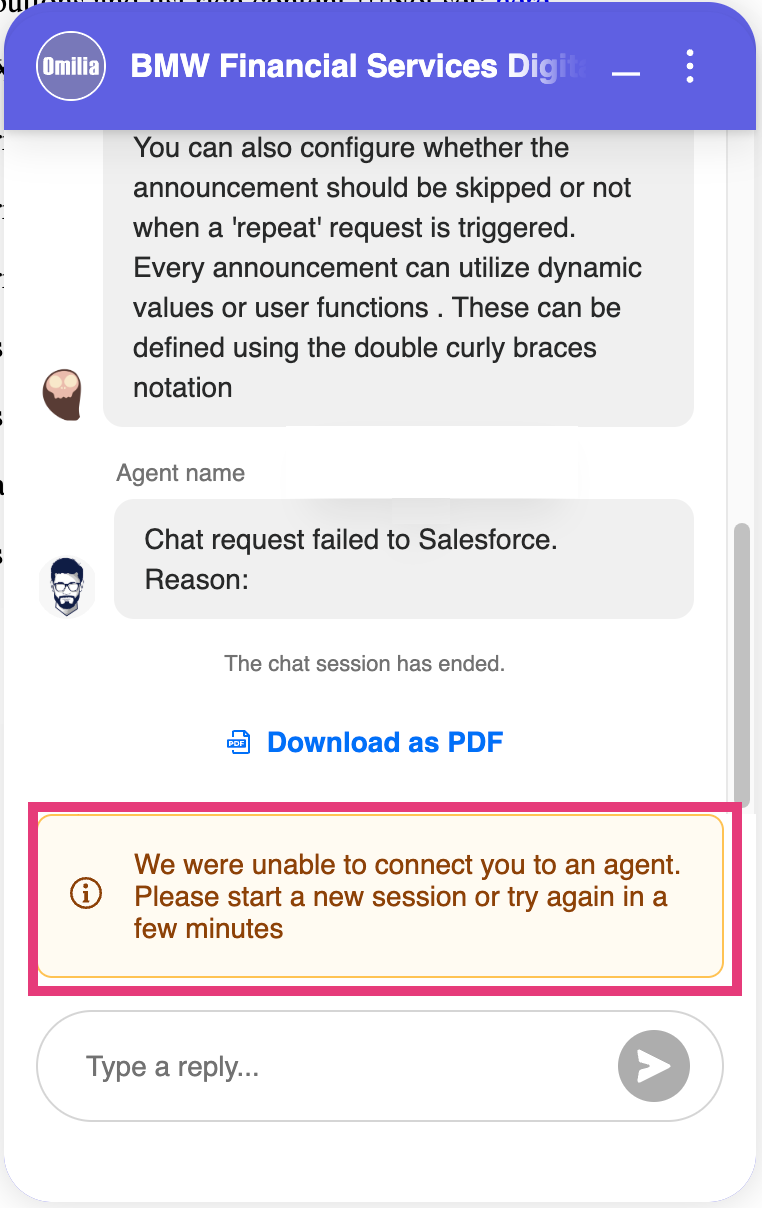
Clearer Agent Timeout Messaging - When a request to connect with an agent times out, the chat now shows a clear message explaining that an agent is unavailable, instead of ending the conversation without explanation. This helps users understand what happened and know what to do next.
Workforce AI 2.6.0
Enhanced Upload Experience
You can now upload recordings with greater confidence using our new resumable upload system. If your connection is interrupted, you can pick up right where you left off. The new interface shows you the progress of every single file, lets you retry individual failures, and alerts you if you try to upload a duplicate.
Batch Visibility
You can now view the contents and metadata of your batches as soon as they are uploaded, making it easier to verify your data before processing begins.
Reliability Improvements
We have added the ability to re-run audio upload jobs that failed, ensuring that your data processing is not stalled by temporary issues.
Security and Privacy
We have strengthened our data handling to ensure your call transcripts and prompts are never stored in system logs. Additionally, we have implemented industry-standard security headers and more secure file handling to keep your data safe.
Bug Fixes
-
Fixed an issue where interrupted uploads required a full restart.
-
Improved the accuracy of duplicate file detection during the upload process.