
Manage tab
To enter the OCP miniApps®, proceed as follows:
-
Log in to OCP® as described in Logging in and logging out.
-
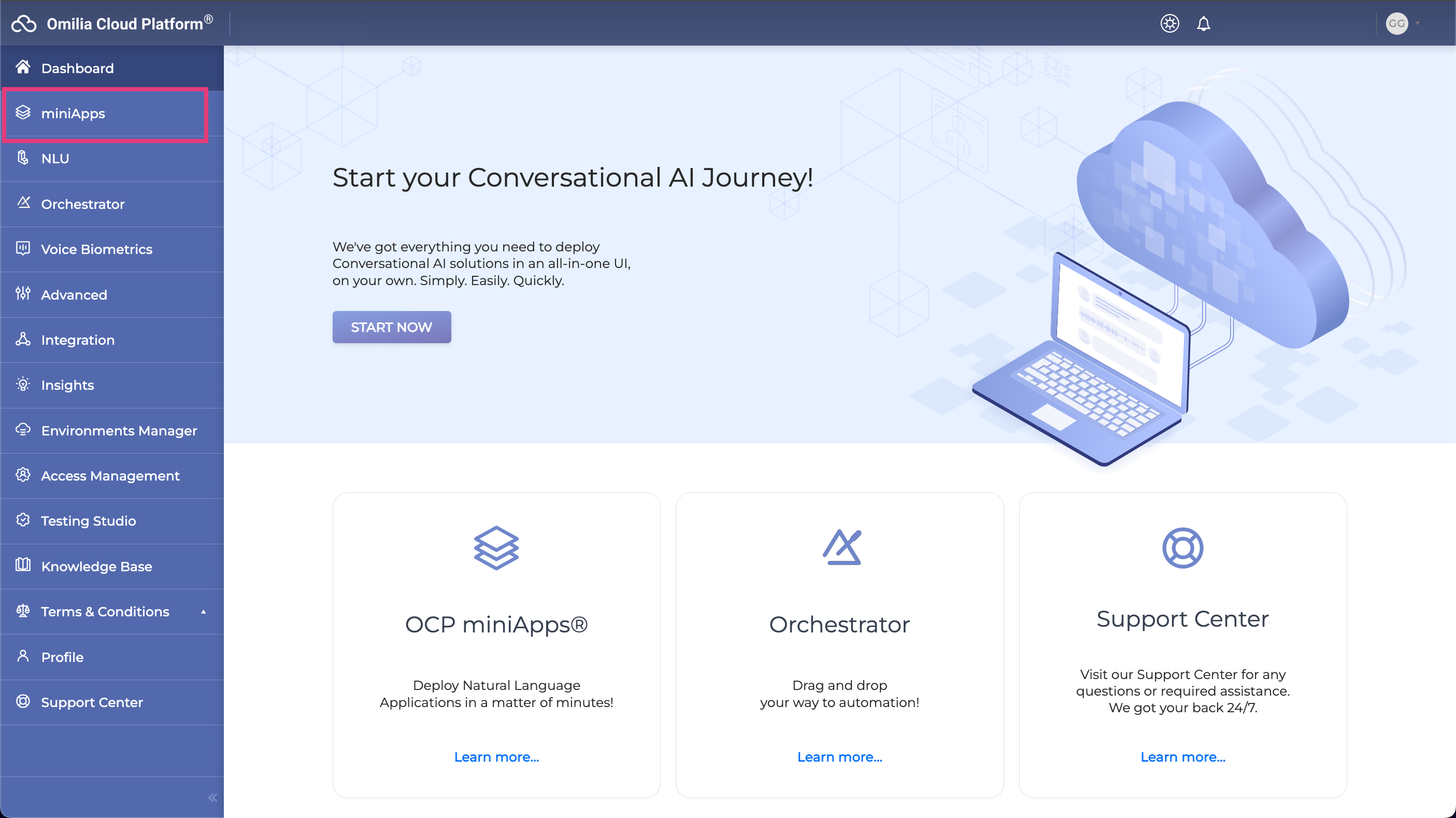
Click miniApps on the left pane.
-
Click Manage. The Manage tab lists all miniApps you created, including their type and group.
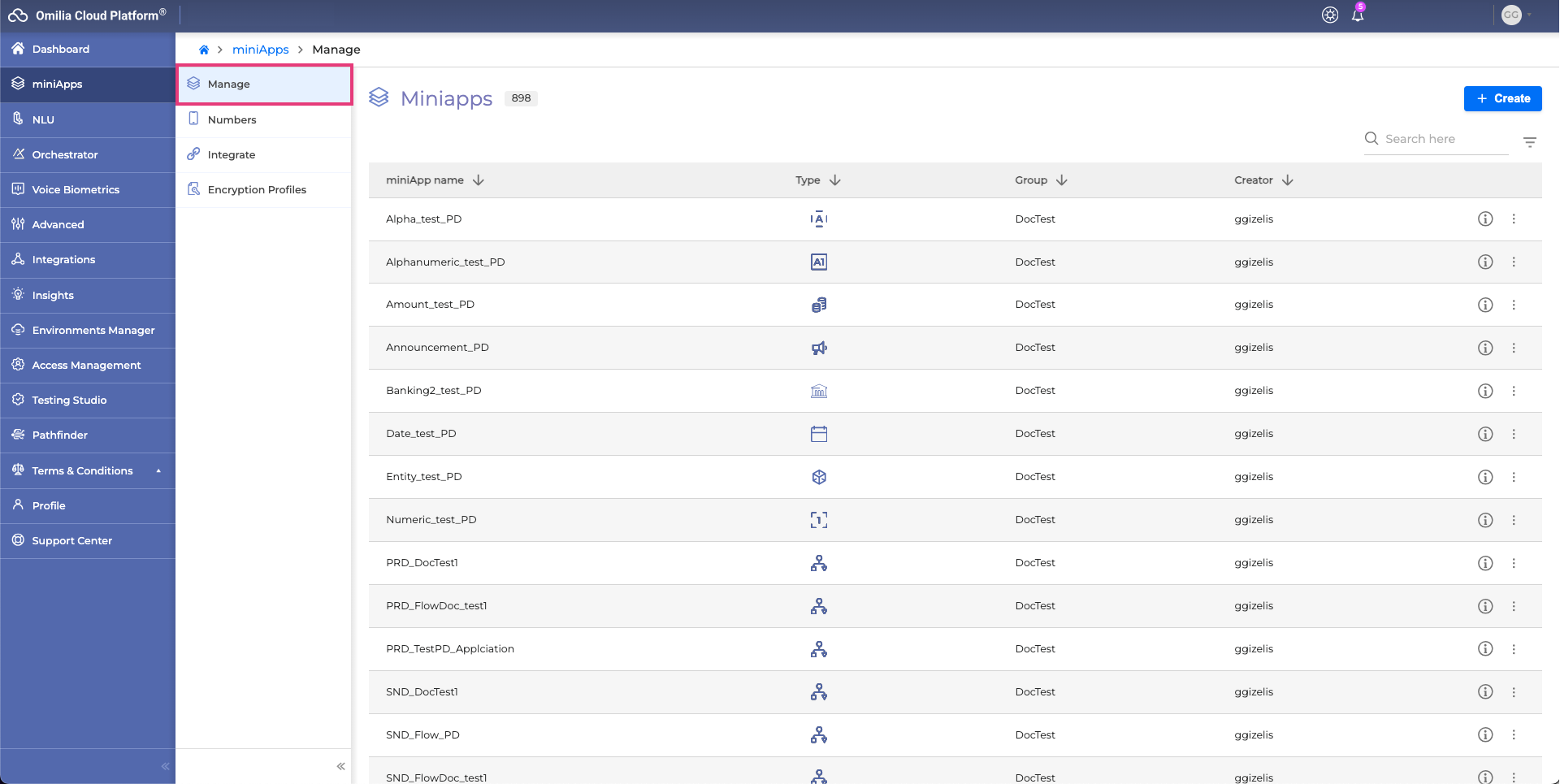
In the Manage tab, you can:
-
Create a new miniApp
-
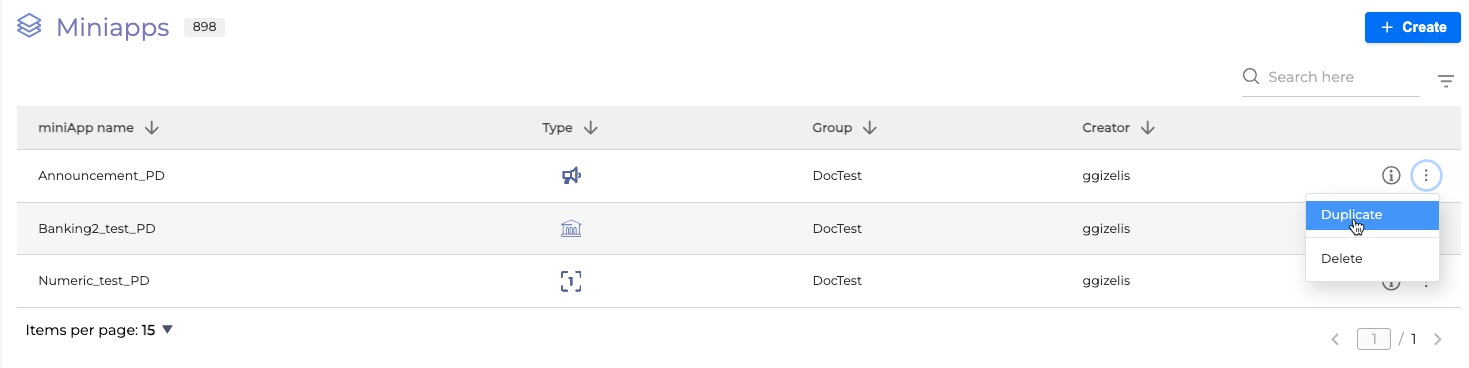
Duplicate an existing miniApp
-
View and delete already created miniApps
-
Search for existing miniApps
-
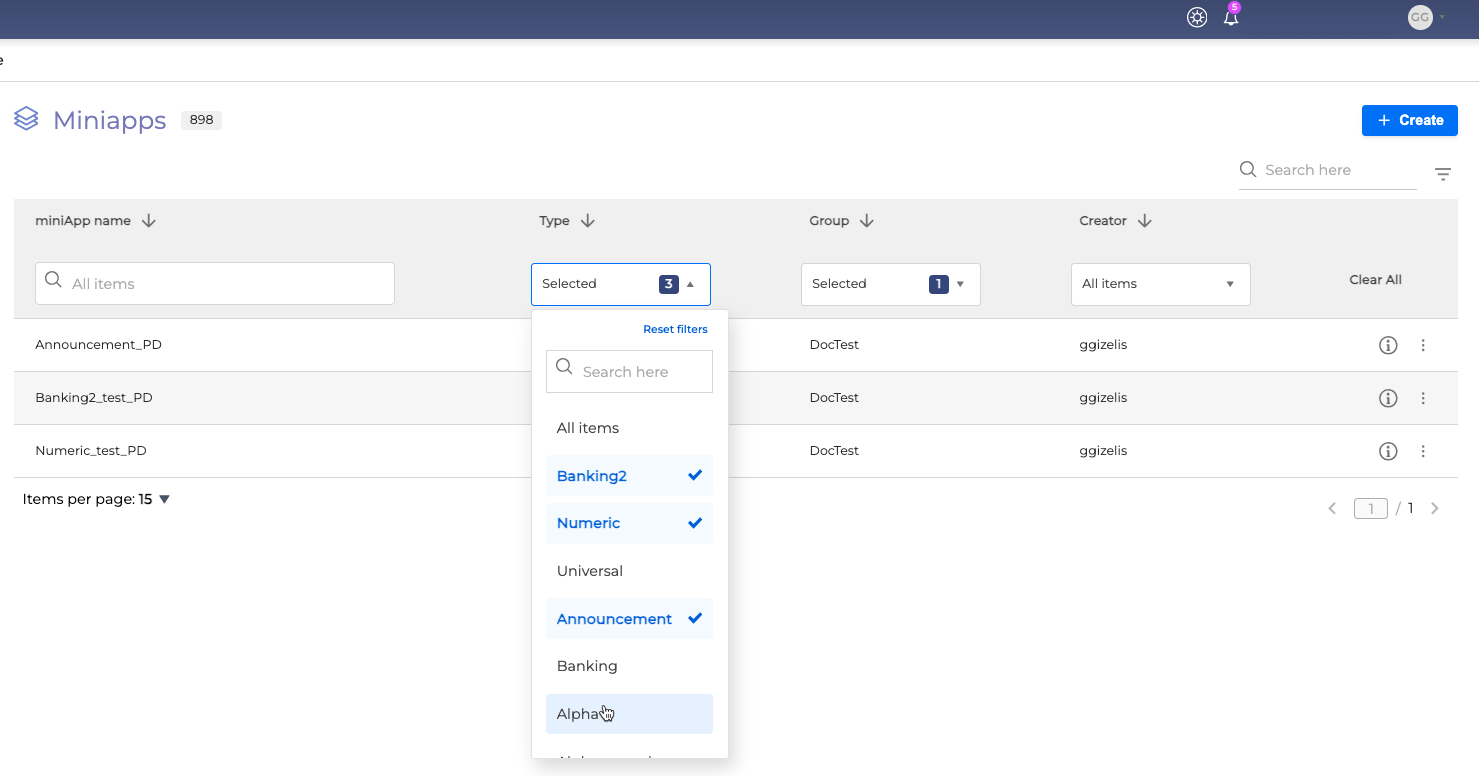
Filter the available miniApps based on category using the filter button

Create Group
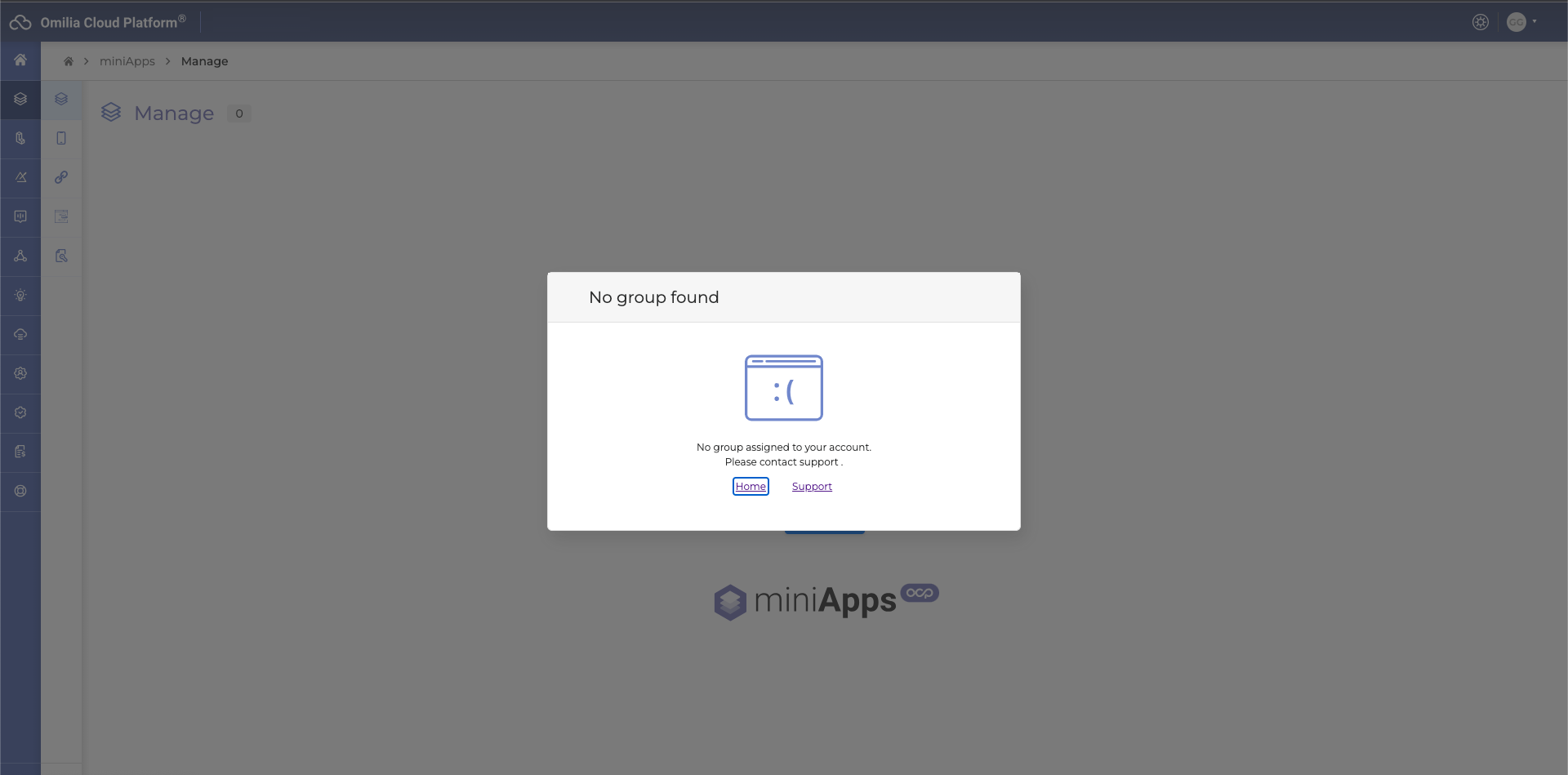
It is not possible to create and view miniApps if you do not belong to a group. If the user does not belong to a group the corresponding info message will pop up when enter the miniApps menu.
Contact Omilia Service Desk to get assigned to a group.
Create a new application
-
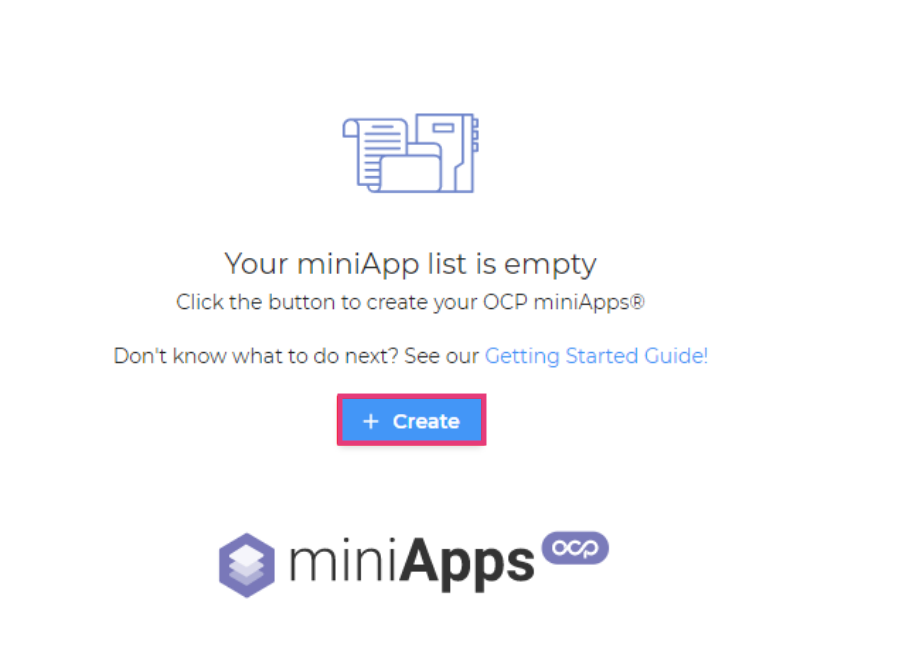
To create a new application, click Create.
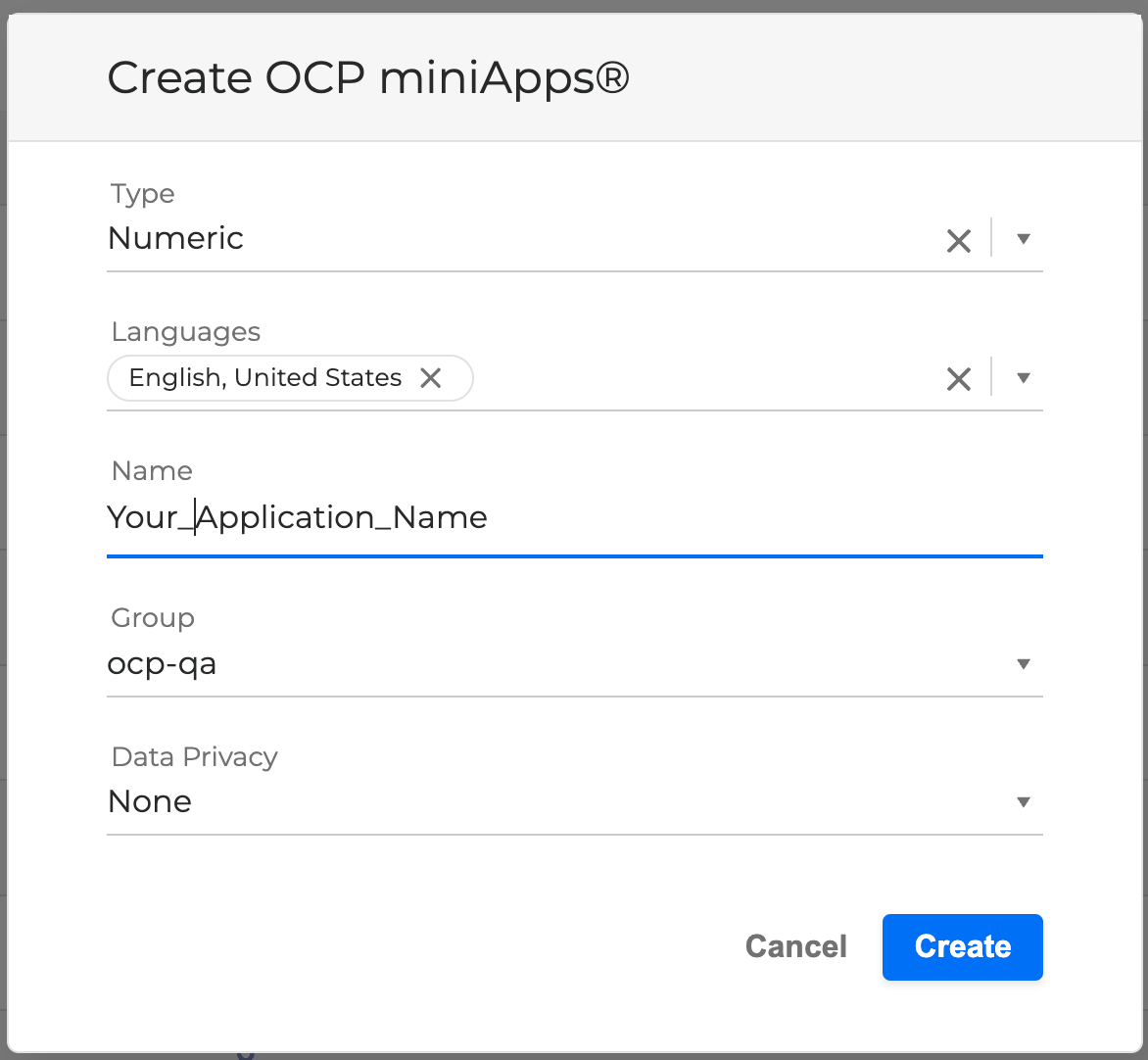
2. In the Create Application pop-up window, fill in the suggested fields:
-
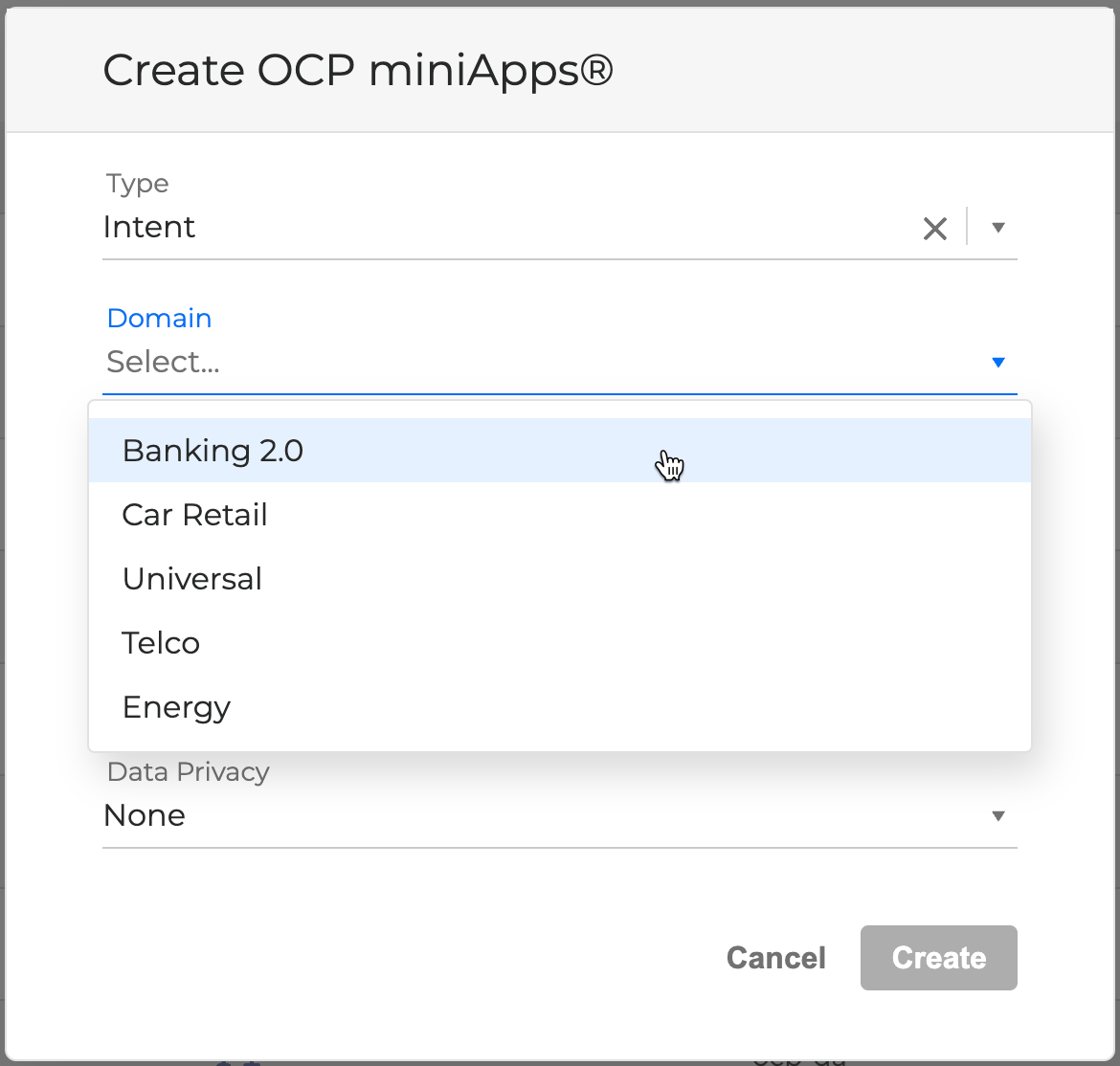
Type: Select the OCP miniApps® type from the drop-down list (Intent, Numeric, Alphanumeric, Alpha, Date, DateRange, Announcement, YesNo, Web Service, Intelli, Corpus Collection, Text).
-
When creating an Intent miniApp, you also need to choose a specific domain
-
-
Name: Enter a name for the application using only alphanumeric chars and underscores.
-
Group: Select the group the miniApps will belong to. The drop-down menu shows only the groups that the signed-in user is already assigned to. Upon creation, the miniApps will be visible to all people who have access to the specific group you select. If you don’t want the miniApps to be shown to other users, select the group named after your username.
-
Data Privacy: Depending on the sensitivity of the information the users provide, you can decide whether this data will be protected. If you want to protect the user data, you can choose how it will be stored. In the Protection Type drop-down menu, you have the following options:
-
None: stores the data as plain text
-
Irreversible Masking (***): stores the data as masked text
-
Envelope Encryption (AES 256): stores the data as encrypted
-
Masked and encrypted data fields become automatically Global.
To view Envelope Encrypted data the following is required:
-
User has the Owner role on that OCP group (assigned by an OrgAdmin).
-
View the data in Monitor:
-
Open Insights → Monitor.
-
Search by Session ID (or Dialog ID / Connection ID).
-
Open the dialog → Dialog Review.
-
Expand the dialog steps / utterances.
With Owner role, envelope-encrypted step values are shown in plain text. There is no separate Decrypt control.
-
3. Click Create to generate the new miniApp.
Duplicate an application
-
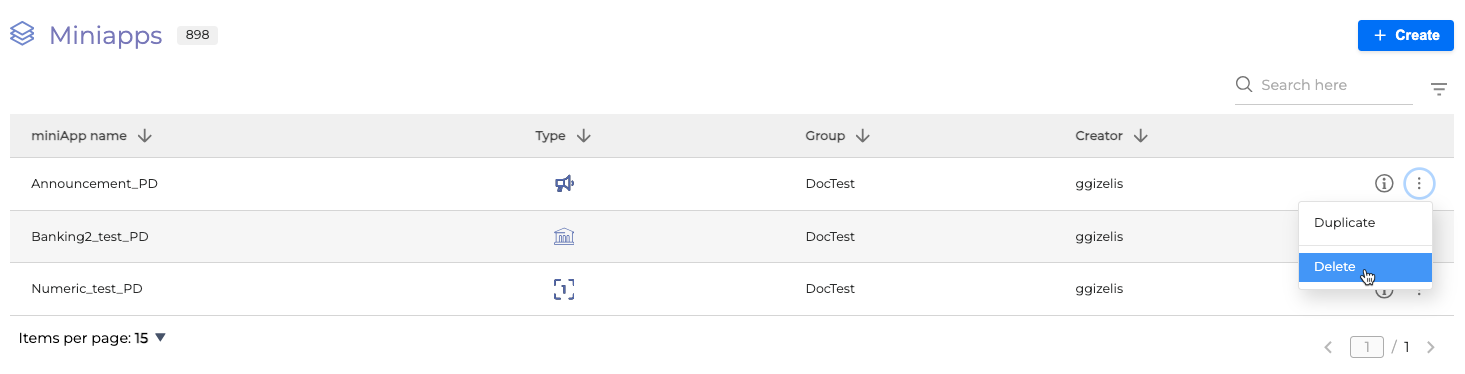
To duplicate an already created miniApp, click the context menu on the right side of the miniApp entry, and click Duplicate.
Duplicate an application
-
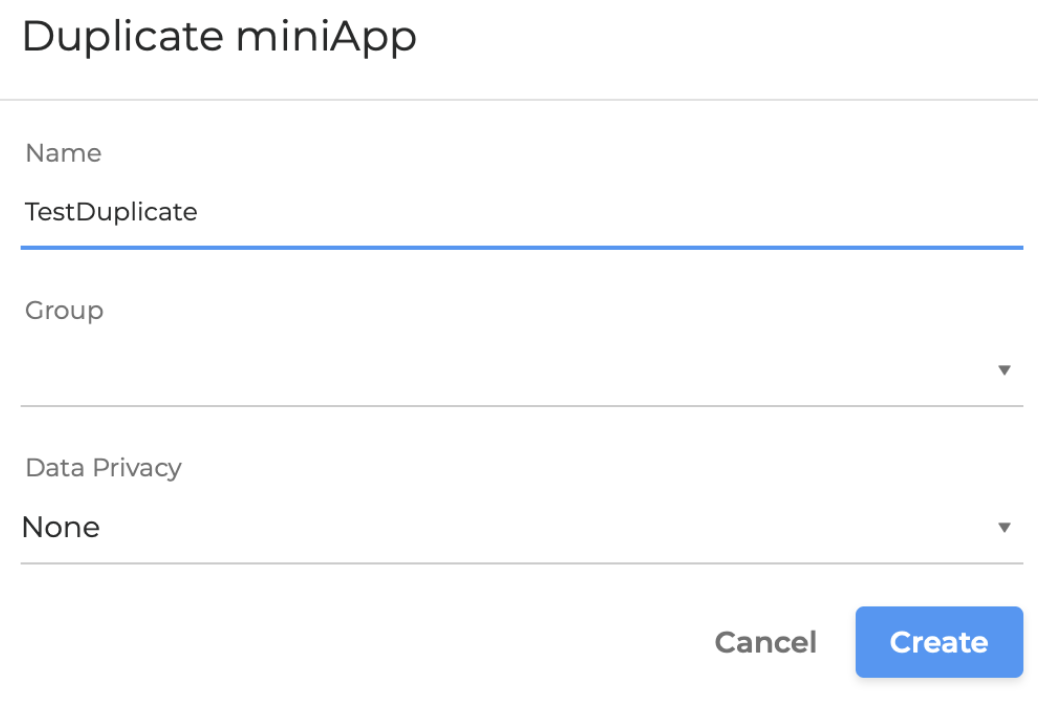
In the Duplicate Application pop-up window fill in the suggested fields:
-
Name: Enter a name for the application using only alphanumeric chars and underscores.
-
Group: Select the Group the miniApps will be assigned to.
-
Data Privacy: Select the Data Privacy type.
3. Click Create to create the new miniApp.
Delete an application
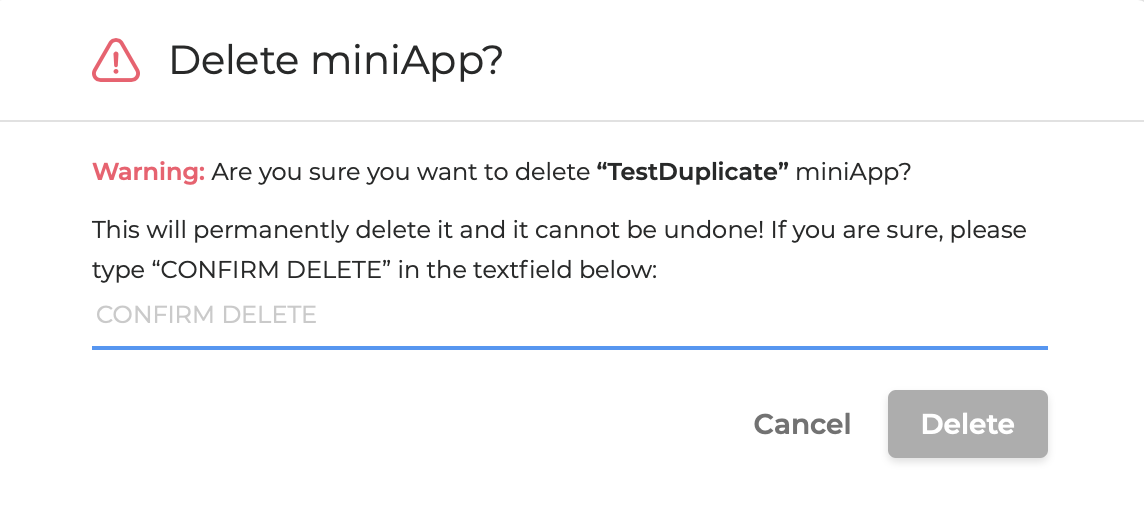
This will permanently delete your miniApp and it cannot be undone.
-
To delete an already created miniApp, click the context menu on the right side of the miniApp entry, and select Delete.
Delete an application
-
Confirm the deletion by typing CONFIRM DELETE.
Export / Import miniApp configuration
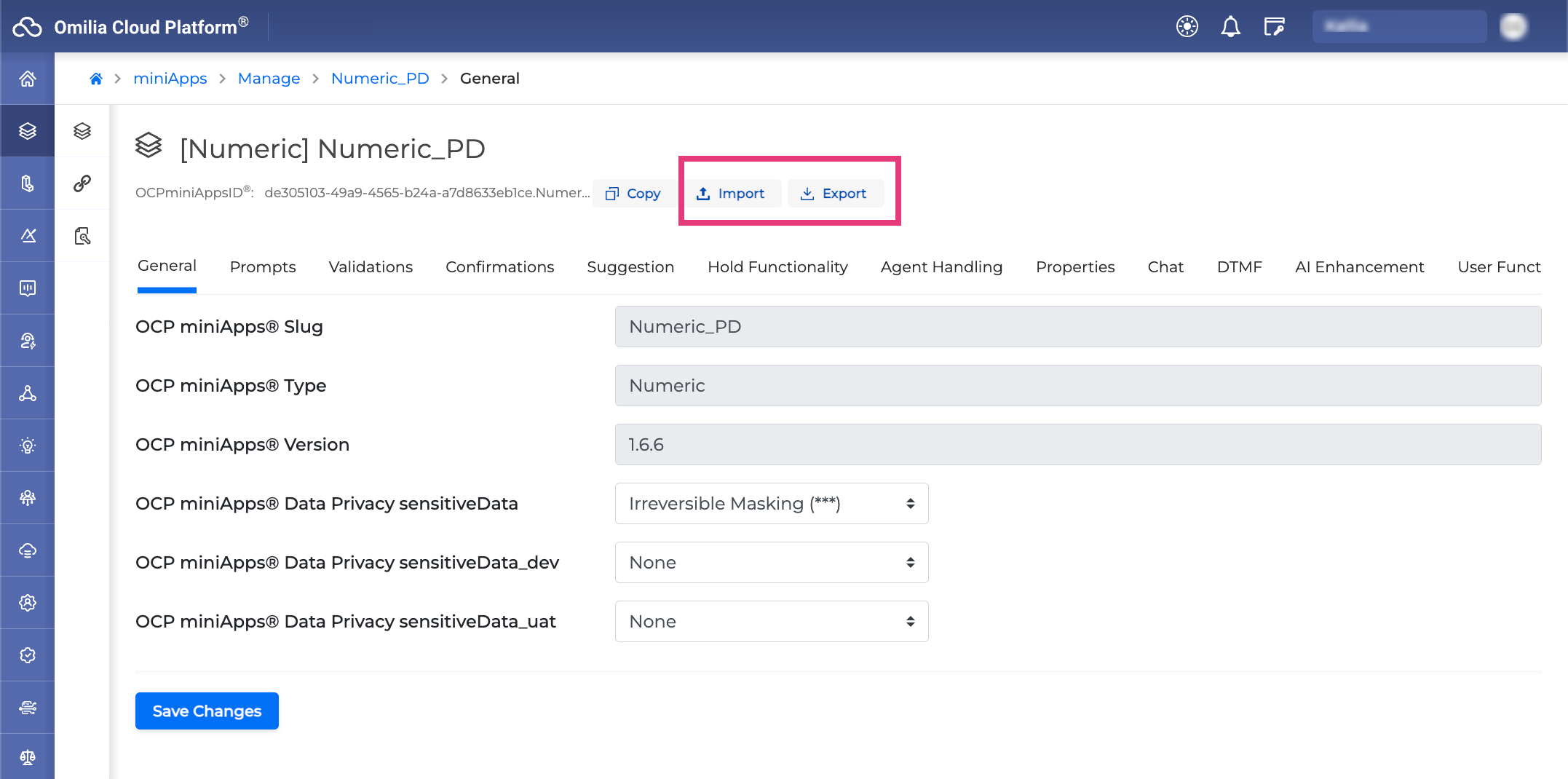
Once a miniApp is created you have the option to import its configuration. The miniApp configuration is a JSON file that can either be created or exported from an already configured miniApp.
Exporting MiniApp Configuration
This process will save your miniApp's configuration as a JSON file for backup or transfer purposes.
To export the configuration of a miniApp, follow these steps:
-
Open the miniApp you wish to extract.
-
Click the Export button.
-
Save the exported JSON file to your desired location.
Importing MiniApp Configuration
This will apply the settings and configurations from the JSON file to your miniApp.
To import a configuration into a miniApp, follow these steps:
-
Open the miniApp you wish to extract.
-
Click the Import button.
-
Select a valid JSON file that contains the miniApp configuration you wish to import.
Edit miniApp Data Sensitivity
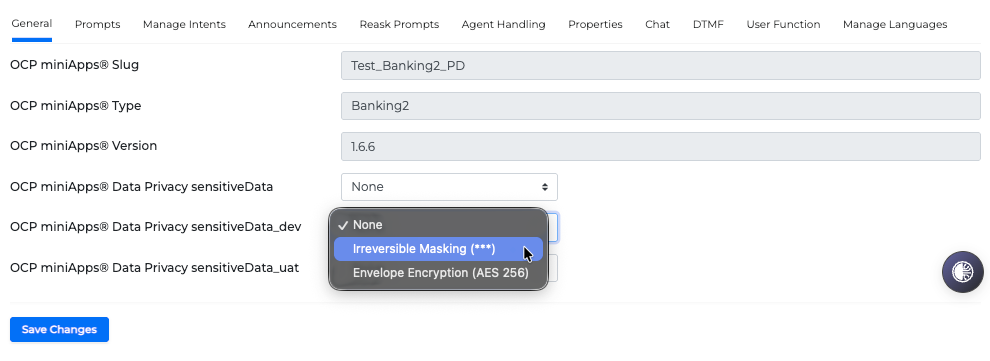
You can change the Data Privacy setting on an existing miniApp without recreating it. Open the miniApp from the Manage tab in the miniApps UI, then update the setting in the General tab.
Edit Data Privacy in the miniApps UI. Do not open the miniApp from the Orchestrator canvas for this change. That path opens an older miniApps UI where the Data Privacy field is read-only.
Select the required data protection option from the dropdown list and save the changes. You can set it separately for Production, Dev, and UAT environments.
Changing the miniApp Data Privacy setting does not require an Orchestrator redeploy, with these exceptions:
-
Applications deployed with a published tag pin the miniApp configuration to that tag. Publish a new tag to pick up the change.
-
If you also mark fields as sensitive manually on the Orchestrator canvas (Field Sensitivity), redeploy the application.
Masked and encrypted data fields become automatically Global.
When the production sensitivity type changes, the platform automatically updates the miniApp's sensitive flag in the database.
This sync only applies to Production. Changes to Dev or UAT sensitivity do not update the sensitive flag.
Masking or encrypting a miniApp applies to logging and storage. It does not change the value used at runtime. Conditions, Web Service calls, JS functions, and miniAppResult receive the real value.
Also mark as sensitive any Web Service miniApp or JS function that uses the sensitive value, and the miniApp that builds miniAppResult. Otherwise the value appears in their logs.
The change applies to new dialogs only. Data from earlier dialogs is not re-encrypted or re-masked. If the miniApp configuration is cached, the change can take up to 5 minutes to take effect.
Output fields of a masked or encrypted miniApp become Global and flow into parent and child flows. Run a full regression test after you enable Data Privacy, unless every output of the updated miniApps is already Global.
Audit logs
From miniApps 2.41.0 onward, all logs are collected and stored in the Admin area under Access Management - Audit logs.
Audit log availability depends on your environment configuration. This feature may not be enabled on all environments. If Audit logs are not visible in your Admin area, contact Omilia Support to verify whether this feature is enabled for your environment.